
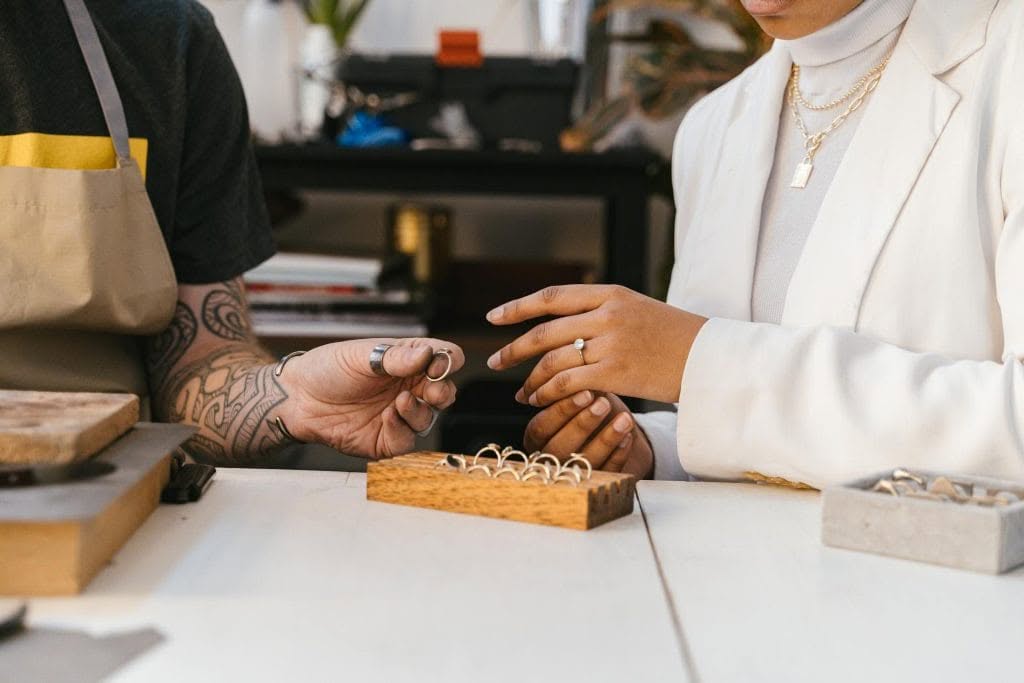
A step-by-step guide to buying an engagement ring without second-guessing every detail.
Buying an engagement ring often feels more complicated than it should. There is the emotional side, the budget side, the style side and the fear of choosing the wrong thing. The easiest way to handle it is to stop trying to solve everything at once. You do not need to become a jewellery expert overnight. You just need a calm process.

The best engagement ring decisions are usually made by people who narrow the search before they shop. Once you know the budget, the style direction and the kind of jeweller you trust, the process becomes much easier to manage. Instead of reacting to every ring you see, you start comparing options that actually fit the person and the moment.
Start by narrowing the search
Before you look at rings, decide three things. How much are you comfortable spending? What kind of style suits the wearer? How quickly do you need the ring? Those three questions remove a huge amount of noise from the search.
If the ring needs to be ready for a proposal date, a custom design may still be possible, but you will need to work backwards from the deadline. If you have more time, you can compare more carefully and ask more questions. If the style preference is obvious, great. If it is not, use clues from existing jewellery, favourite colours and the pieces the person wears most often.
A short list is far better than a giant mood board. Too many options make people second guess themselves. A focused shortlist helps you move from browsing to deciding. That is the goal.
Think about the person before the product
The ring should feel like it belongs to the person who will wear it. Look at the jewellery they already own. Do they wear delicate pieces or bolder ones? Do they prefer gold or silver tones? Do they like clean minimal design or something with more sparkle?
If you are buying for someone else and want the proposal to be a surprise, these clues matter even more. You are trying to make a piece that feels familiar and exciting at the same time. The better you understand the wearer, the easier the purchase becomes.
Compare like with like
One of the biggest sources of stress is comparing rings that are not actually similar. A solitaire and a halo, for example, may sit in different price ranges and create very different visual impressions. If you want a fair comparison, compare stones, settings and metals that are broadly alike.
When you see a ring online or in store, ask what is driving the price. Is it the stone quality, the setting, the craftsmanship, the brand or the rarity of the design? Understanding value makes it easier to choose a ring for the right reasons.
This is also where the four Cs matter in a practical way. You do not need to obsess over them, but you do need to understand the trade offs. Sometimes a slightly different cut or colour grade can create a more beautiful ring within budget than forcing the carat size higher.
Keep the ring as a whole in view
Try not to focus on one number alone. A larger stone is not automatically a better ring. A poorly cut stone or a clumsy setting can feel less special than a smaller ring that is beautifully proportioned and well made. Look at the ring as a complete object. How does the stone sit? How does the metal frame it? Does the design suit the wearer?
If the answer is yes, the ring is already doing its job.
Ask the questions that save stress later
The right questions make the process feel less like a gamble. Ask whether the ring can be resized, how the setting is secured, what aftercare is offered and whether the stone comes with any grading or certification information that helps you compare it properly. If the ring is custom, ask how many design changes are allowed and how long production will take.
For online stores, ask about return policies, shipping, insurance during transit and whether there are clear measurements or side view images. For local jewellers, ask whether they can show you similar pieces in person and whether they can adjust the ring if the fit needs changing later.
A reputable jeweller should make those answers easy to understand. If the store becomes vague at this stage, that is useful information. Good service should make you feel calmer, not more confused.

Ask about the long term, not just the proposal
It is easy to focus on the moment of giving the ring and forget the years that follow. Ask whether the ring will work with the future wedding band. Ask how much maintenance it will need. Ask whether the wearer will still love it in a few years, not just at the proposal moment.
That perspective removes a lot of pressure because it shifts the goal from perfect to thoughtful.
Decide between online and local with confidence
There are good reasons to buy from both online jewellers and local stores. Local jewellers can offer a more hands on experience, let you see the metal and stone in person and help with resizing or aftercare later. Online stores can give you better comparison tools and a wider range if they show the product details properly.
If you are shopping in Australia, choose a seller who is transparent. Look for clear descriptions, measurements, good photography, policy information and a willingness to answer questions. The best stores do not rush you. They help you compare options calmly.
Jewellink can help here because it gives you a way to compare jewellers, brands and local services without jumping between dozens of tabs. That makes it much easier to build a shortlist that makes sense.
Choose the jeweller who helps you understand the trade offs
The most helpful jeweller is the one who explains the differences clearly. They should be able to tell you why one ring costs more than another, what the design offers and what the practical pros and cons are. If a jeweller is willing to compare options honestly, that usually tells you a lot about how the whole buying experience will feel.
Avoid the most common mistakes
The first mistake is chasing the wrong detail. Many first time buyers get distracted by carat weight and forget that a well cut, well proportioned ring is often more satisfying than a bigger one with less harmony.
The second mistake is choosing too fast. An engagement ring is an important purchase, but it does not need to happen in a panic. If you can give yourself time to compare, the decision becomes much easier.
The third mistake is ignoring the person who will wear the ring. Style matters. Comfort matters. The ring should feel like something they will love, not something you assumed they should love.
The fourth mistake is not asking enough questions. A little extra time with the jeweller now can prevent a lot of uncertainty later.
Bring it home with a simple decision rule
At some point, the question stops being “what is the perfect ring?” and becomes “which ring feels right for this person, this budget and this moment?” That is usually when the answer becomes clearer.
If the ring suits the wearer’s style, fits the budget, works with the proposal timing and comes from a jeweller you trust, you are in good shape. The purchase does not need to feel flawless in every way. It just needs to feel considered and confident.
If you want to keep the process calm, remember the rule that matters most. Narrow the options first, ask the useful questions, then choose the ring that still feels right after you have had time to think. That is usually the ring worth buying.
Where to go next
Compare jewellers, designers and valuation services across Australia.
Open page Browse custom design studiosUseful when you need bespoke work, remodelling or engagement-ring advice.
Open page View repair and valuation servicesCompare practical aftercare services before you visit a jeweller.
Open pageMore guides to explore

Mazzucchelli’s Chapter 123 Collection: Seven Diamond Designs Explained
A neutral overview of Mazzucchelli’s seven-piece Chapter 123 yellow-gold and natural-diamond collection, with practical details for comparing each…
Read guide
How to Choose a Wedding Band for Your Engagement Ring
A practical guide to matching a wedding band to your engagement ring, with comfort and style in mind.
Read guide
How to Start a Jewellery Business in Australia
A simple starting point for jewellery businesses that want to launch, price properly and get found.
Read guide
Comments
0 comments
Be the first to comment
Share your thoughts, experience or question below.
Leave a comment
Share your thoughts or ask a question. Your email address will not be published.